
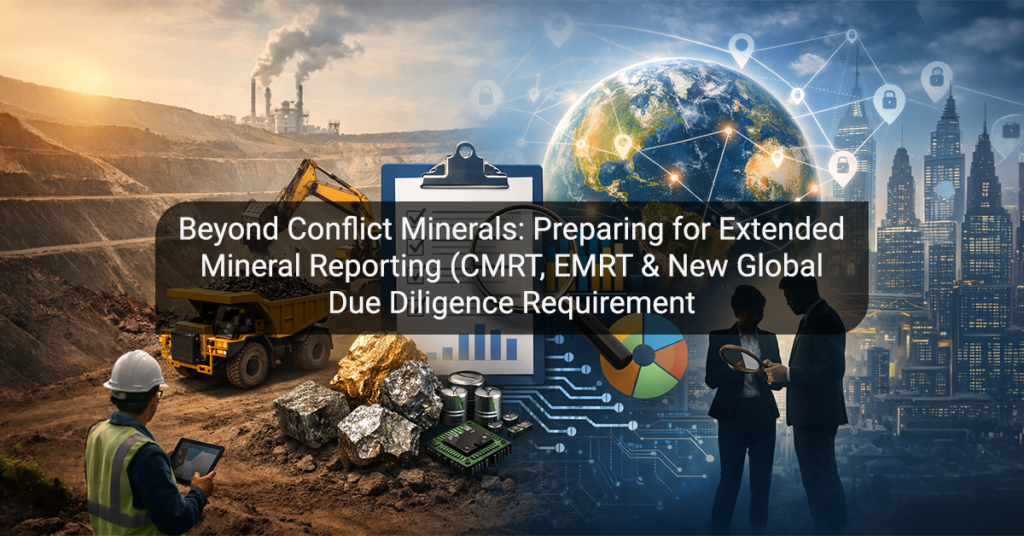
A few years before, conflict mineral compliance for some electronics and manufacturing firms meant focusing only on the four metals: tin, tantalum, tungsten and gold. That is not sufficient anymore, as regulations across the world are being broadened, and responsible sourcing expectations now cover more than just the original conflict minerals.
The tightening of due diligence requirements in various regions, as well as the use of CMRT and EMRT, are causing enterprises to reconsider how they handle supply chain transparency. The change is not abrupt, but it is very firm. Those companies who adopt early will be in a better position to steer clear of compliance gaps, supplier disruptions, and reputational risk.
Why Extended Mineral Reporting Is Gaining Momentum
There is a single message being communicated from both regulatory agencies and industry associations regarding responsible sourcing’s broadening scope to include a greater variety of minerals and materials, particularly those associated with environmental damage/harm and human rights violations.
The commitment to extended reporting deals primarily with:
- Cobalt, mica, lithium, copper, natural graphite, and nickel.
- Greater transparency into lower tiers of suppliers.
- Standardized processes for collecting and validating data concerning 3TG supplies.
As a tool for reporting conflict minerals, the CMRT continues to provide compatibility between multiple company reports about 3TG, while the EMRT addresses issues relating to the supply of minerals used in battery or energy storage production. In doing so, these two resources are paving the way for a more comprehensive set of compliance requirements, emphasizing the importance of consistent, accurate and traceable reporting practices.
Challenges Companies Commonly Face
Expanding from fundamental reporting, there is new operational complexity created for many organizations who do not struggle through their intent but rather through disjointed data and varying responses from suppliers.
The common issues associated with these companies include:
- Limited visibility beyond tier 1 supplier
- Missing or old declarations
- Non-scalable manual validations
Thus, with the continual development of reporting frameworks and increasing levels of audit scrutiny, it is becoming more difficult for compliance teams to keep up with larger amounts of data and maintain a high level of accuracy across submissions.
The Role of Integrated Compliance Support
Extended mineral reporting has increasingly become intertwined with other regulatory obligations. Chemical safety, material transparency, and supplier documentation are areas where these requirements are continually overlapping. This is why SDS services can be seen as not only a complement for broader compliance workflows but also as providing structured documentation and data alignment.
When material disclosures, safety data, and mineral sourcing records are produced according to consistent standards, companies can reduce duplication and enhance their preparedness for audits. Besides, with integrated systems, teams can recognize gaps in the compliance process at an early stage rather than only reacting when the submission time comes.
Preparing for What Comes Next
Extended reporting is not something companies should worry about in the distant future. It has started to influence procurement and supplier engagement strategies already. Those companies that view compliance as a continuous process and not a one-time annual task are the ones that change their behavior quicker when new requirements arise.
As the world’s expectations keep growing, efficient conflict mineral compliance is a matter of having processes that can scale up, data that is double-checked and experts with experience leading the way. With the backup of dependable SDS Services, companies might be able to go beyond just doing the minimum level of disclosure and thereby establish a compliance structure capable of handling any changes in the regulations.



 +1.585.935.7123
 +91-804-148-6861